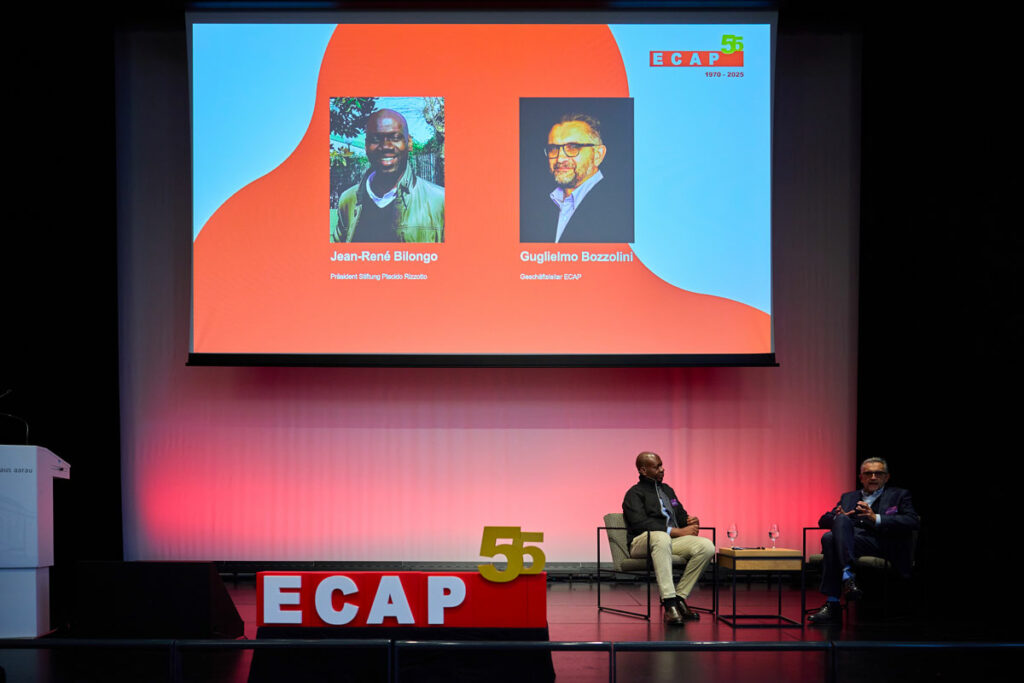
A strategic alliance has been formed in Zurich to carry out research and training projects within the Italian and Swiss agricultural sectors. The Placido Rizzotto Observatory Foundation—established on the initiative of the trade union Flai Cgil and specializing in monitoring the links between the agri-food supply chain, irregular labor, and organized crime—has signed a memorandum of understanding with the Ecap Foundation, which for 55 years has promoted training, integration, and equal opportunities for migrants and vulnerable workers in Switzerland. This agreement marks the beginning of a structured collaboration.
The memorandum of understanding between the Fondazione Osservatorio Placido Rizzotto and Ecap commits both parties to three core objectives: analyzing and studying working conditions and production systems within the primary sector in Switzerland; developing and sharing resources for the training and protection of workers; and participating in and promoting international projects aimed at safeguarding labor in the primary sector.
Through this agreement, the Osservatorio Placido Rizzotto will be able to extend its reach to Switzerland, integrating its own research and monitoring efforts with Ecap’s expertise in the training and integration of migrants. At the same time, Ecap will benefit from the Foundation’s experience in analyzing issues such as irregular labor, the caporalato (illegal labor brokerage) system, and “agromafia” activities—thereby strengthening the focus on trade union representation, legality, and the protection of rights within the agricultural sector.
At an operational level, the plans include: joint research to analyze employment conditions within Italian and Swiss agricultural supply chains; the production of multilingual training materials for migrant workers, with a specific focus on the realities of rural areas, seasonal work, and illicit labor intermediation; the organization of courses, seminars, and awareness-raising initiatives for trade union representatives, training institutions, workers’ associations, and agricultural businesses; and the promotion of European and transnational projects, with the goal of establishing a shared observatory that bridges the two countries, generating comparable data and replicable intervention models.
“We are proud of this new collaboration,” states Jean René Bilongo, President of the Placido Rizzotto Observatory Foundation. “Thanks to this partnership, our work—monitoring the employment conditions of agricultural workers and denouncing exploitation and the caporalato (illegal labor brokerage) system—now extends to Switzerland, while also benefiting from the expertise that Ecap brings to the table.”
The primary mission of the Placido Rizzotto Observatory is to study and monitor the deep-seated issues that undermine labor within the agri-food supply chain—specifically exploitation, the caporalato system, and criminal infiltration into the agricultural labor economy and related sectors. The Observatory’s work takes the form of various publications, most notably its biennial “Report on Agromafia and Caporalato,” as well as a series of thematic monographs (Quaderni) that provide rigorous, multidisciplinary analyses of conditions in rural areas, including living and working standards, gender-based discrimination, and illegal practices within supply chains.
For its part, Ecap works to provide training and integration opportunities for migrants and workers in vulnerable situations. Its structure, with an extensive presence throughout Switzerland and a broad range of offerings—including language courses, vocational training, training for instructors, IT, and examinations and certifications—makes it an ideal partner for addressing issues related to the integration, training, and protection of migrant workers in the agricultural sector.